
Falkland Islands Wildlife Guide: Penguins,Albatrosses, Seals, Dolphins & Whales
Where wildlife isn’t just something you see
There are places where wildlife watching means standing at a viewpoint, taking a photograph and moving on.
The Falkland Islands can be very different.
Here, the experience is often about having time and space.
Time to sit beside a penguin colony and watch the relationships between individual birds.
Time to watch black-browed albatrosses using the wind along a cliff.
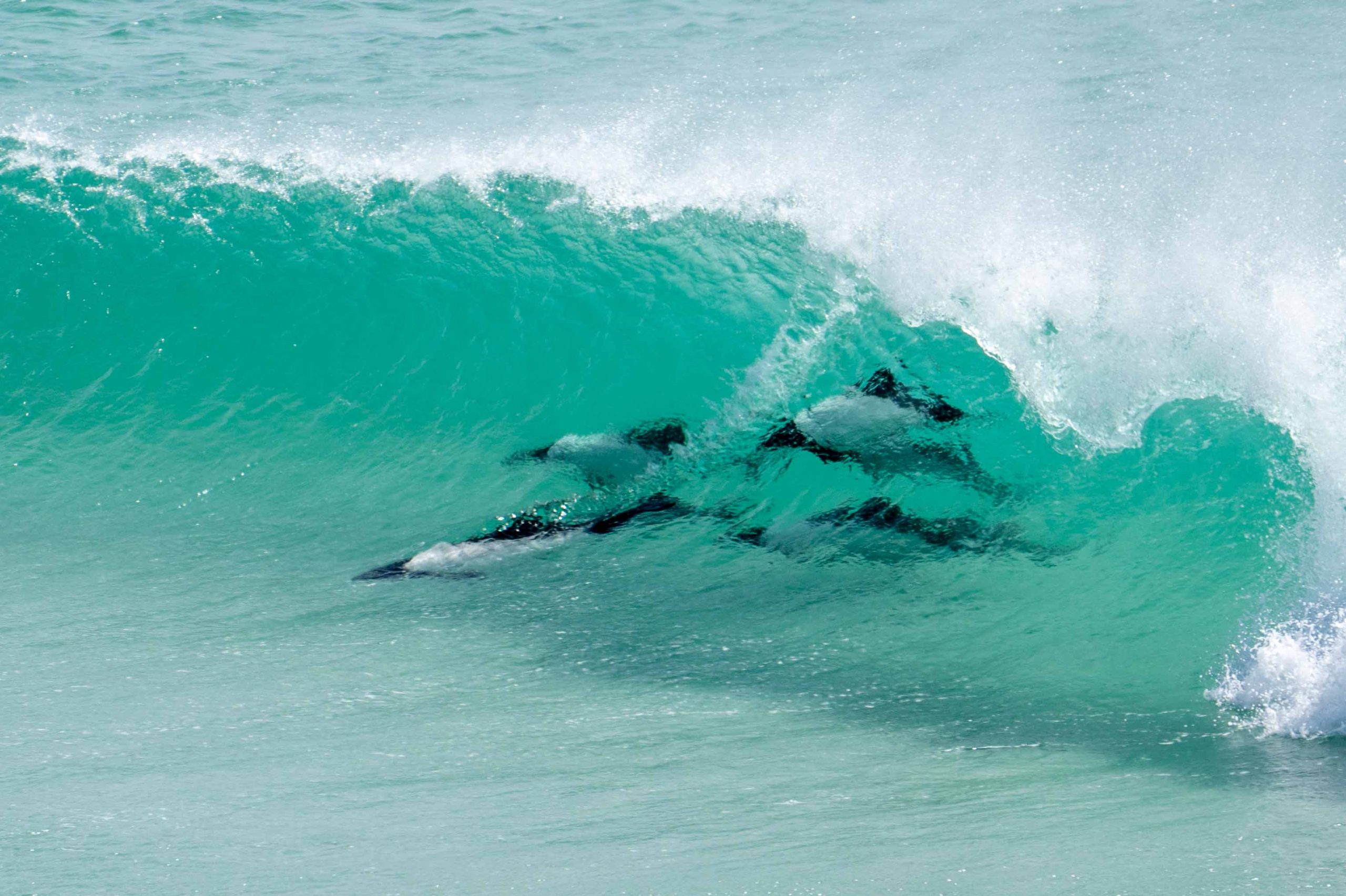
Time for a Commerson’s dolphin to notice your Zodiac and decide to investigate.
And space — often a remarkable amount of it.
The Falklands support five breeding species of penguin, globally important seabird colonies, three breeding species of seal and a rich marine environment in which whales, dolphins and orcas can all be encountered. More than 20 cetacean species have been recorded around the islands.
But statistics don’t really explain why wildlife experiences here stay with people.
For us at LatitudeX, the difference is often something much simpler:
you can stop and watch.
Why are the Falkland Islands so good for wildlife?
Look at the Falklands on a world map and it’s easy to underestimate them.
The archipelago stretches across hundreds of islands in the South Atlantic, creating an enormous amount of coastline: beaches, cliffs, tussac grass, sheltered bays, rocky headlands and offshore islands.
These different habitats support breeding seabirds and marine mammals as well as resident and migratory wildlife.
For visitors, another important factor is accessibility.
Some remarkable colonies can be reached overland. Others are accessible by inter-island aircraft. And travelling by small expedition vessel opens up coastlines and remote islands that cannot be reached by road or air.
That creates an unusual combination:
extraordinary concentrations of wildlife without necessarily having extraordinary concentrations of people.
At some locations, you may find yourself spending far more time with the wildlife than you would expect elsewhere.
That’s particularly important for photographers and birders, but you don’t need to be either to appreciate it.
Penguins of the Falkland Islands
For many first-time visitors, penguins are the stars.
And the Falklands have plenty of them.
Five species breed here:
King penguin
Gentoo penguin
Southern rockhopper penguin
Magellanic penguin
Macaroni penguin
The first four can form a significant part of a Falklands wildlife itinerary.
Macaroni penguins are much scarcer, so we consider seeing one a bonus rather than something that should be promised.
The important thing is that the five species don’t all live in the same way.
They behave differently, breed differently and occupy very different landscapes.
That makes exploring several islands much more rewarding than simply visiting one penguin colony.
King penguins
King penguins are the largest penguin species regularly encountered in the Falklands.
They are immediately recognisable: tall, elegant birds with vivid orange-yellow markings around the head and upper breast.
Where to see king penguins
The best-known location is Volunteer Point on East Falkland, which supports a major king penguin colony and also has gentoo and Magellanic penguins. The Falkland Islands Tourist Board describes it as a colony of more than a thousand king penguins.
One of the fascinating things about king penguins is their unusually long breeding cycle.
Unlike species following a straightforward annual timetable, kings can have birds at different stages of breeding present within the same colony.
That can make a king penguin colony feel like several chapters of the story happening simultaneously.
There may be adults displaying, chicks at different stages of development and young birds approaching independence.
And then there is the sound.
A large king penguin colony isn’t a quiet place.
It is busy, vocal and endlessly entertaining.
Gentoo penguins
If kings are elegant, gentoos have a different sort of charm.
They are energetic, inquisitive and widespread around the Falklands.
Gentoo colonies can be found at numerous locations around the archipelago, including beaches and open coastal areas. At Bertha’s Beach, for example, they share habitat with Magellanic penguins, endemic Falkland flightless steamer ducks and other birdlife; Commerson’s and Peale’s dolphins are also frequently seen offshore.
During the breeding season, gentoo colonies transform.
Spring brings courtship, nest building and egg laying.
December brings hatching.
By January, chicks begin gathering in crèches while their parents head to sea to forage.
Later in summer, those chicks grow rapidly and begin preparing for independence.
For photographers, this means a gentoo colony in October can be a completely different experience from exactly the same colony in February.
Southern rockhopper penguins
Rockhoppers bring attitude to a wildlife itinerary.
They’re smaller than kings and gentoos, with yellow crests, bright red eyes and a remarkable ability to negotiate steep rocky coastlines.
And they really do hop.
Watching them make their way between the ocean and a colony high above the sea is one of the Falklands’ great wildlife spectacles.
They often breed in spectacular settings, including cliff-top colonies alongside black-browed albatrosses.
That combination can be particularly memorable.
At West Point Island’s Devil’s Nose, for example, black-browed albatrosses and rockhopper penguins occupy dramatic cliffs and tussac-covered ledges together. Macaroni penguins are occasionally spotted among them.
It’s one of those places where the landscape is every bit as important as the individual animal.
Magellanic penguins
Magellanic penguins offer a different experience again.
They’re burrow nesters.
Instead of enormous open colonies, you’ll often encounter them around coastal grasslands and beaches, disappearing underground into nesting burrows.
They are summer visitors to the Falklands and are widely distributed around the archipelago.
Their call is distinctive — often compared to the braying of a donkey — which explains their local nickname, “jackass penguins.”
They can be easy to overlook when visitors are focused on kings or rockhoppers.
Don’t.
Spend time watching them around their burrows and along the shoreline and you’ll see another completely different side of Falklands penguin life.
Macaroni penguins
Macaroni penguins are the wildcard.
They breed in very small numbers in the Falklands compared with the other species and may sometimes be found among rockhopper colonies.
If you see one, enjoy the moment.
But an ethical wildlife itinerary should never pretend that a scarce species can be produced on demand.
That’s an important principle for us.
Wildlife isn’t a checklist with guarantees attached.
Black-browed albatrosses
Penguins may receive most of the attention, but ask us which Falklands wildlife experience we would happily repeat again and again and black-browed albatrosses would be near the top of the list.
They are magnificent birds.
On the ground, they’re almost slightly awkward.
In the air, everything changes.
An albatross seems to understand the wind in a way we never will.
It barely appears to work. It simply turns, accelerates and sweeps along the cliff.
The Falklands are globally important for the species. Current Falklands tourism information states that more than 70% of the world’s black-browed albatross population can be found breeding around the archipelago.
For us, however, the experience is more powerful than the number.
Steeple Jason: the albatross experience
Steeple Jason is one of the places that demonstrates why travelling farther into the Falklands matters.
Remote and exposed, it supports an extraordinary black-browed albatross colony.
But this isn’t somewhere we think should be experienced by rushing ashore, taking photographs and leaving.
Sit down.
Watch.
Adults come and go from the colony.
Birds interact around their nests.
And overhead, albatross after albatross uses the wind flowing across the island.
If we had one completely free day in the Falklands, with no guests, itinerary or responsibilities?
We’d be quite happy to spend it walking along a beach and sitting on the cliffs watching albatrosses.
That probably tells you everything.
More than penguins: the Falklands for birders
Penguins and albatrosses are only the beginning.
The Falklands support an impressive diversity of seabirds, waterbirds and land birds.
Visitors may encounter southern giant petrels, imperial shags, skuas, geese, terns, petrels, caracaras and numerous smaller species.
There are endemic birds too.
These include the Cobb’s wren and the Falkland flightless steamer duck.
And then there’s one of our favourites:
the striated caracara, known locally as the Johnny rook.
Curious, intelligent and occasionally interested in objects you would prefer to keep, they have a habit of making themselves memorable.
For serious birders, the attraction of the Falklands isn’t simply ticking species.
It’s the ability to observe birds within spectacular and often relatively uncrowded habitats.
Elephant seals
If penguins provide charm, elephant seals provide scale.
A large male southern elephant seal is enormous.
This is the world’s largest pinniped, and seeing one on a beach gives you an immediate appreciation of just how substantial that means.
They can also move considerably faster than their appearance suggests.
Give them space.
When can you see elephant seals?
The breeding season is particularly dramatic.
At Sea Lion Island, males arrive during September and pups are born from late September into early October. Females nurse their pups for only a few weeks before mating and returning to sea.
By peak breeding season in October, beaches can become intensely active.
Large males compete for position.
Females tend pups.
Young animals call.
And occasionally orcas patrol offshore.
Later in summer, adults return ashore for their annual moult.
So, as with penguins, the month you visit changes the story you’re watching.
Southern sea lions
Southern sea lions are another important part of Falklands coastal wildlife.
Their breeding season follows a different timetable from elephant seals.
Adults begin gathering during early summer, with pupping starting around late December and January.
As summer progresses, pups become increasingly conspicuous around breeding locations.
Sea lions can be encountered in several parts of the archipelago; Cape Dolphin on northern East Falkland, for example, has a resident southern sea lion presence alongside breeding gentoo and Magellanic penguins.
Again, give them space.
A sleeping sea lion may look extremely relaxed.
That doesn’t make it an invitation to approach.
South American fur seals
The third breeding seal species found in the Falklands is the South American fur seal.
They can be encountered around rocky coastlines and offshore islands.
New Island, for example, supports breeding groups of fur seals and sea lions alongside an extraordinary concentration of birdlife, including black-browed albatrosses and three penguin species.
Locations like this illustrate why a Falklands wildlife expedition shouldn’t be divided too rigidly into “penguin day”, “seal day” and “bird day”.
The ecosystems overlap.
The interesting part is seeing how everything fits together.
Commerson’s dolphins
Some wildlife encounters stay with you because you travelled halfway across an island to find them.
Others come looking for you.
Commerson’s dolphins fall into the second category.
They’re small, strikingly marked dolphins frequently encountered in Falklands coastal waters.
And they can be intensely curious.
One of our most memorable encounters began when dolphins noticed our presence.
Then more appeared.
Eventually hundreds of Commerson’s dolphins were around us, playing in the water, surfing through waves near the beach and moving close to our Zodiacs.
We didn’t summon them.
We didn’t feed them.
We didn’t need to chase them.
They chose to investigate us.
That’s the kind of wildlife encounter that stays with you.
Peale’s dolphins
Peale’s dolphins are another characteristic Falklands species.
Along with Commerson’s dolphins, they’re among the cetaceans visitors are most likely to encounter close to shore.
Both species are frequently seen in shallower waters and may accompany boats.
That makes travelling by sea particularly interesting.
You aren’t simply moving between wildlife locations.
The journey itself can become the wildlife experience.
A quiet transit suddenly changes because somebody spots movement alongside the vessel.
Cameras appear.
Then, occasionally, cameras go down again because everybody realises it’s more enjoyable simply to watch.
Orcas in the Falklands
Orcas — killer whales — are annual visitors to Falklands waters.
One particularly interesting location is Sea Lion Island, where the coastline and concentrations of seals and penguins provide opportunities to see them hunting close to shore.
Orcas have been recorded there from October into summer, with young elephant seals entering the water creating particularly interesting opportunities around the breeding season.
But this requires an important caveat.
An orca is never guaranteed.
You can put yourself in the right place.
You can choose an appropriate season.
You can wait.
The animal still makes the final decision.
That’s wildlife watching.
Whales of the Falkland Islands
Whales are perhaps one of the less expected Falklands wildlife experiences.
More than 20 cetacean species have been recorded in Falklands waters, including sei, southern right, humpback, minke and fin whales.
The species receiving particular scientific attention is the sei whale.
These baleen whales use Falklands waters to feed, with summer and autumn providing important seasonal opportunities.
The Falkland Islands Tourist Board identifies sei whales as the most commonly observed whale in the islands and notes that they feed locally on lobster krill and other crustaceans.
For visitors particularly interested in whales, the later part of the visitor season becomes increasingly interesting.
February sees opportunities increasing, while March and April can be particularly significant for sei whale activity.
That makes the Falklands wildlife calendar wonderfully asymmetric.
October’s great marine-mammal story might be elephant seals.
March’s might be whales.
When is the best time for wildlife in the Falklands?
There is no single answer because the wildlife changes constantly.
Broadly:
October brings courtship, nesting, egg laying and the drama of elephant seal breeding.
November brings incubation across many seabird colonies and continued marine-mammal activity.
December brings hatching penguins and albatrosses alongside the beginning of sea lion pupping.
January brings penguin chicks, crèches, albatross chicks and long summer days.
February brings rapidly growing young wildlife, fledging activity and increasing whale opportunities.
March brings penguin fledging and stronger opportunities for sei whales as the season moves into autumn.
For a detailed species-by-species breakdown, see our Best Time to Visit the Falkland Islands: Month-by-Month Wildlife Guide.
Wildlife timing varies between locations and years, so treat any calendar as a guide rather than a timetable. Falklands Conservation’s wildlife calendar demonstrates just how much breeding activity shifts across species through spring and summer.
Where are the best places to see wildlife?
There isn’t one “best” wildlife location.
That’s part of the point.
Different islands offer very different combinations of species, landscapes and experiences.
Volunteer Point
Particularly famous for king penguins, with gentoo and Magellanic penguins also present.
Saunders Island
One of the locations we particularly value for the combination of wildlife diversity, scenery and walking.
Steeple Jason and the Jason Islands
Extraordinary for black-browed albatrosses and the sheer scale of seabird life.
West Point Island
Black-browed albatrosses and rockhopper penguins occupy spectacular cliff landscapes, while dolphins, whales, fur seals and sea lions can also be encountered.
Sea Lion Island
Particularly important for elephant seals, sea lions, penguins and opportunities to encounter orcas.
New Island
A rich combination of black-browed albatrosses, rockhopper, gentoo and Magellanic penguins, caracaras, fur seals, sea lions and Peale’s dolphins.
The real opportunity comes from combining locations.
That’s when you begin to understand the Falklands as an ecosystem rather than a series of wildlife attractions.
How close can you get to wildlife?
Close enough to have extraordinary encounters.
But the objective should never be to get as close as possible.
Our starting point is simple:
don’t change the animal’s behaviour.
If an animal becomes alert because of you, changes direction, leaves its resting place or appears uncomfortable, you’ve probably gone too far.
Move back.
Never block a penguin’s route between the colony and sea.
Don’t surround wildlife.
Don’t chase dolphins.
And don’t assume an animal approaching you gives you permission to approach it.
Sometimes the most responsible thing you can do is sit still.
That also happens to be one of the best ways to experience wildlife.
Why the Falklands are exceptional for wildlife photography
It’s easy to say “lots of wildlife”.
That’s only part of the reason.
For us, the Falklands offer photographers a particularly powerful combination:
abundant wildlife + proximity + dramatic landscapes + long summer light + relatively few crowds + time.
The last one matters.
If you only have fifteen minutes at a colony, photography becomes reactive.
When you have time, you can watch first.
You begin to recognise patterns.
You notice where birds are travelling.
You anticipate behaviour.
You start thinking about backgrounds and light rather than simply getting the animal in the frame.
And you can put the long lens down.
A penguin surrounded by an empty beach can tell a better story than another portrait.
An albatross against the cliffs says something about where the bird lives.
A Zodiac surrounded by dolphins tells a story about the encounter.
The Falklands give photographers room to make those decisions.
Wildlife watching by small expedition vessel
Some of the Falklands’ wildlife can be reached by road.
Some can be reached by aircraft.
Some locations become possible because you’re travelling by sea.
That’s one of the reasons LatitudeX explores the islands aboard a small expedition vessel.
It allows us to access places unavailable by road or aircraft while giving us something equally valuable:
flexibility.
Weather always affects a Falklands expedition.
Always.
A rigid schedule can therefore become a weakness.
Travelling by small vessel allows an expedition team to work with conditions and, where possible, adjust plans around weather and wildlife.
It also means the Falklands don’t need to be treated as a short stop on the way to somewhere else.
We can spend time here.
And wildlife rewards time.
Responsible wildlife watching
The Falklands remain extraordinary partly because many wildlife encounters still feel natural.
Protecting that matters more than any photograph.
We follow a few straightforward principles:
- Give wildlife space.
- Observe behaviour constantly.
- Give animals right of way.
- Never block access between colonies and the sea.
- Don’t feed wildlife.
- Don’t chase wildlife for photographs.
- Keep noise and disturbance to a minimum.
- Follow local conservation guidance and instructions at individual sites.
- If an animal appears disturbed, increase your distance.
And sometimes:
put the camera down.
Not every experience needs to become content.
Who will love a Falklands wildlife expedition?
Birders, obviously.
Photographers too.
But you don’t need to arrive with a species checklist or a camera worth more than your car.
The Falklands particularly suit people who are curious enough to watch.
People who enjoy walking.
People comfortable with weather changing the plan.
People interested in remote landscapes.
And travellers prepared to slow down.
Because the most memorable wildlife encounter may not be the animal you travelled there hoping to see.
It might be hundreds of dolphins appearing beside the Zodiac.
An albatross passing almost silently overhead.
A penguin wandering through your field of view.
Or simply sitting on a cliff for an hour and realising you haven’t looked at your watch once.
Our favourite way to experience Falklands wildlife
People sometimes ask which animal is our favourite.
That’s difficult.
Ask us where we’d spend a completely free day and the answer is easier.
Go to the cliffs. Watch the albatrosses. Walk on the beach.
No checklist.
No rushing.
No attempt to “complete” the Falklands.
Because that’s perhaps the biggest mistake a wildlife traveller can make here.
The Falklands look small on a world map.
They aren’t.
And if you’ve only stopped here briefly on the way to Antarctica?
You’ve had an introduction.
There is much more waiting beyond it.
Continue exploring the Falklands
Read: The Ultimate Guide to Visiting the Falkland Islands →
Read: Best Time to Visit the Falkland Islands — Month by Month →
Coming next: Where to See Penguins in the Falkland Islands →